
A wartime diary. A journey far from home. And the objects a family chose to keep.
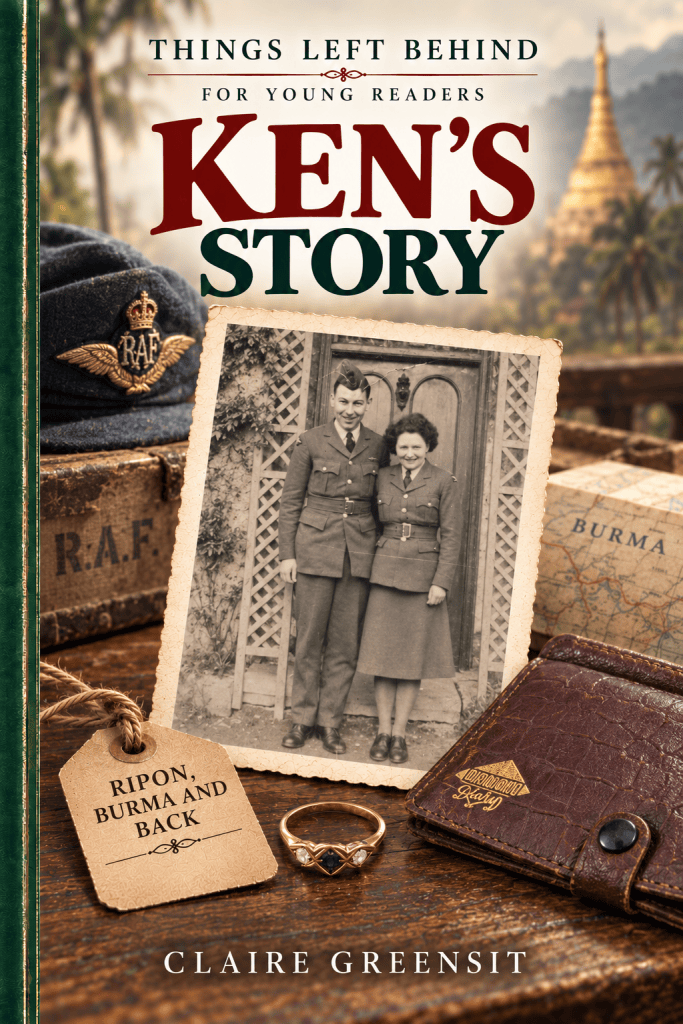
Ken Greensit was born into a farming family, but he chose a different path.
At the outbreak of the Second World War, Ken joined the RAF as a gunner. Ken’s Story for Young Readers follows him as he leaves home and learns to navigate wartime life thousands of miles away from everything familiar.
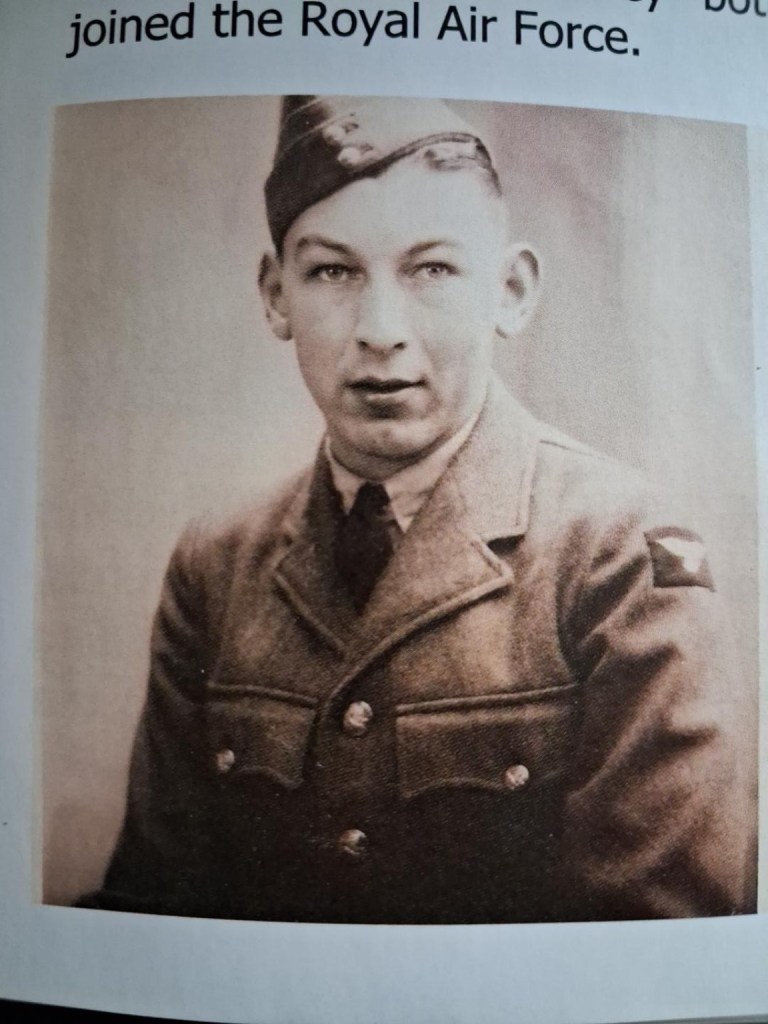
A war recorded as it happened
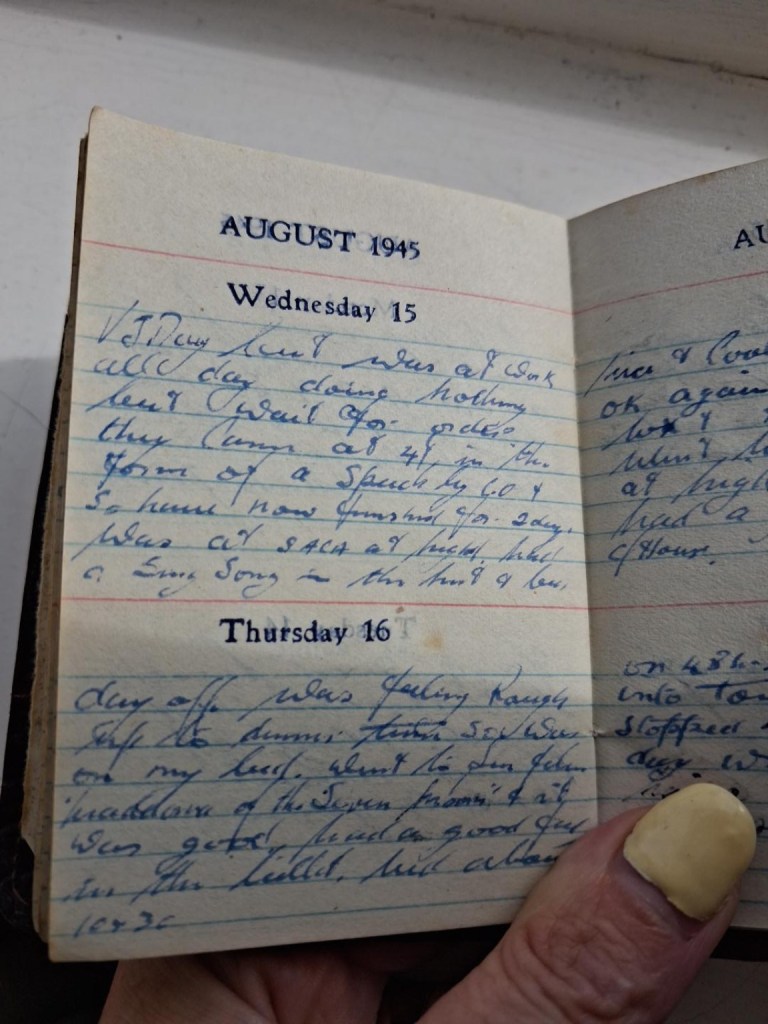
One of the most important sources for Ken’s story is his wartime diary.
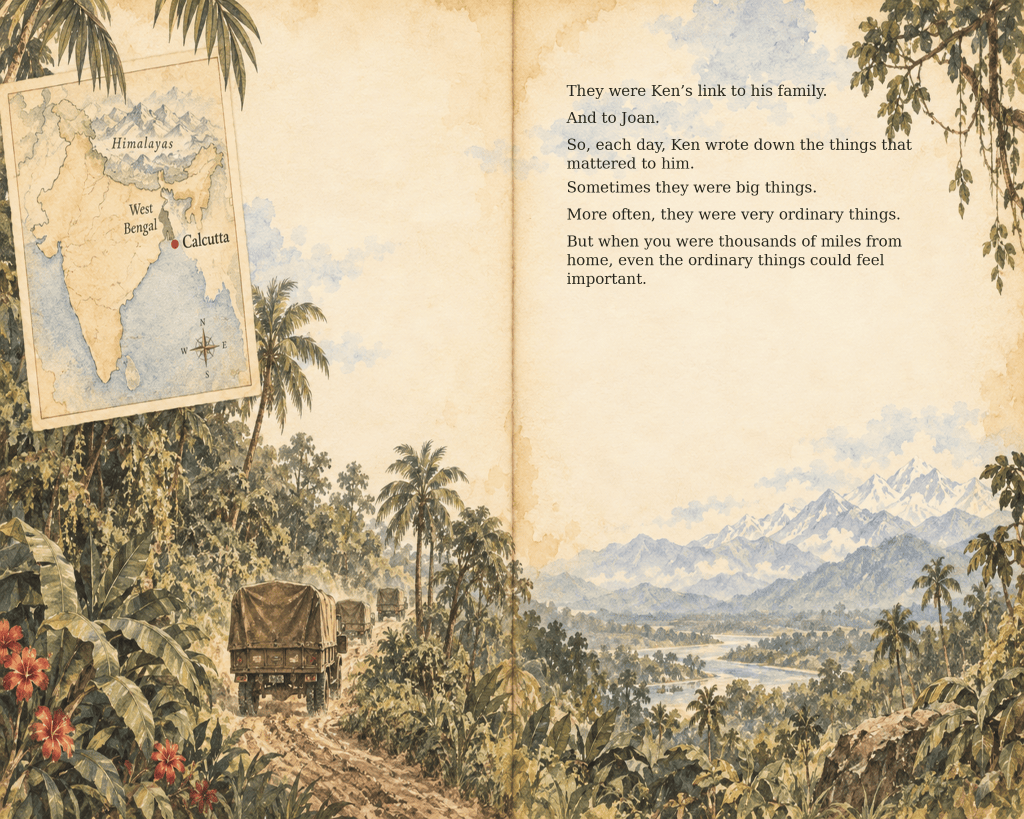
Unlike a memory recorded many years later, Ken wrote about his experiences at the time. His diary records the ordinary as well as the extraordinary — where he went, what he did, who he heard from and the small details of daily life that mattered when home was so far away.
That allows young readers to ask important questions about historical evidence:
What can a diary tell us?
What might its writer leave out?
Does writing something at the time automatically make it completely reliable?
How is a diary different from a memory recorded many years later?
The story of the blotting-paper ring
Some stories survive because somebody writes them down. Others survive because somebody keeps an object.
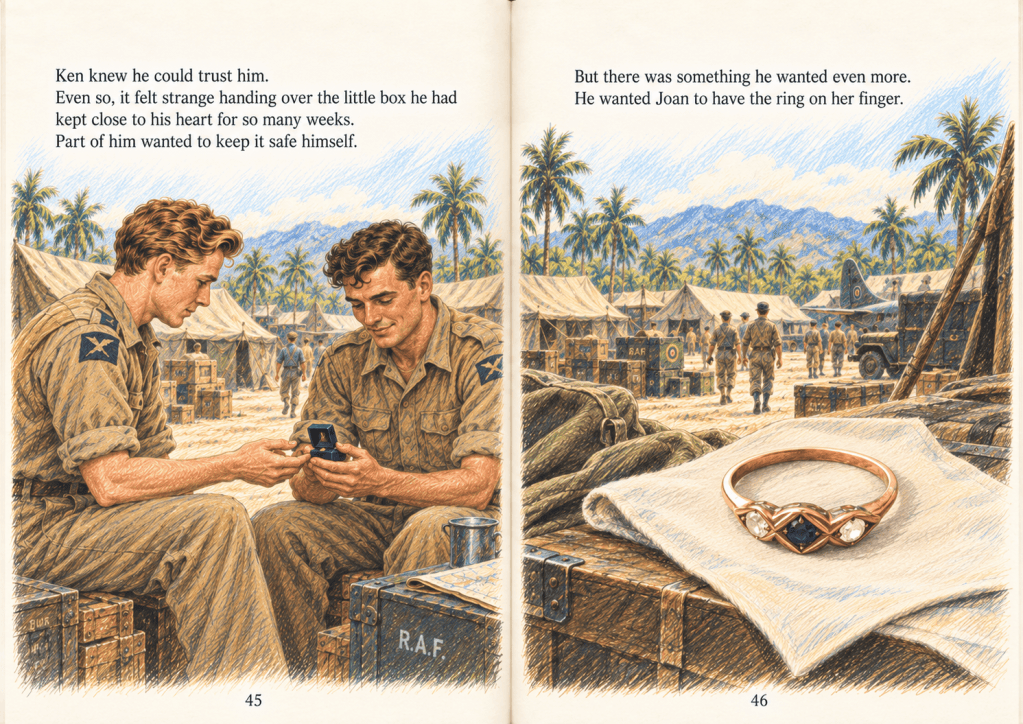
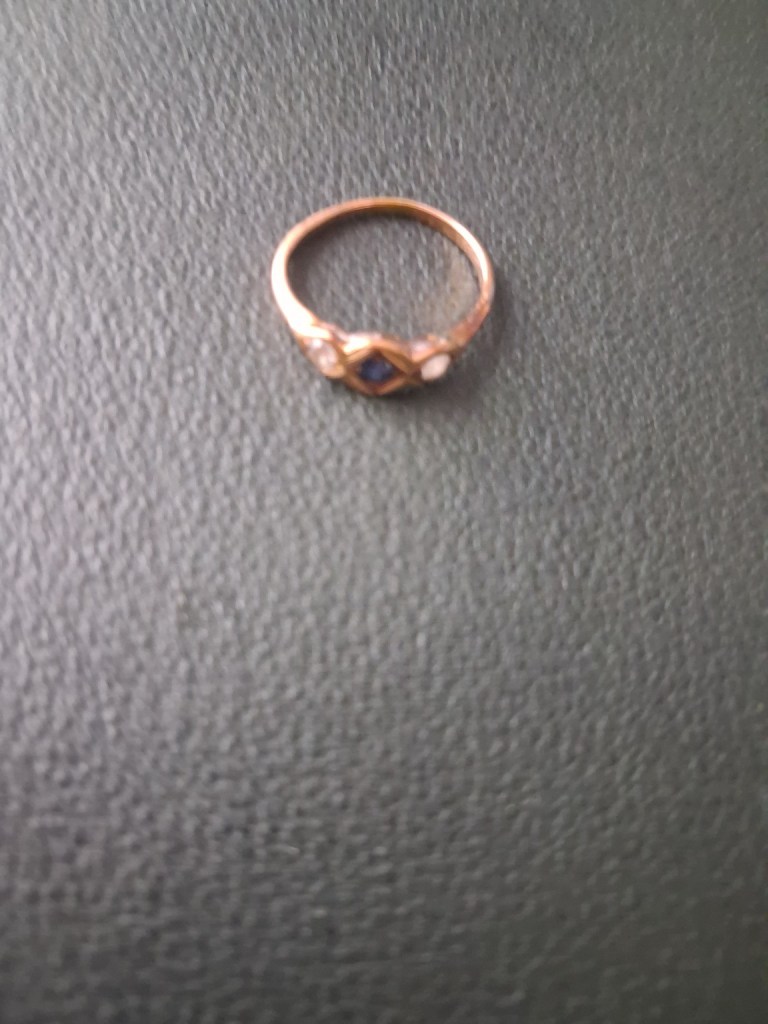
At the heart of Ken’s story is the remarkable story of a ring and the blotting paper connected with it — a small, personal object that links Ken’s wartime life far from home with Joan and the future he hoped to return to.
What does a family choose to keep?
Ken’s story has been reconstructed from his wartime diary, family stories and surviving artefacts. Together they form a small family archive.
A diary survives. A ring is kept. Photographs and other objects remain. Other things disappear completely.
That gives children the chance to consider an important historical question: How does what survives shape the story we are able to tell?
What we know — and what we can only infer
Like the other books in the Young Readers collection, Ken’s story encourages children to separate different kinds of historical knowledge.
- what Ken recorded directly in his diary;
- what surviving documents and objects can confirm;
- what family memory adds;
- what we can reasonably infer from the evidence;
- and what remains unknown.
The gaps are not hidden. They are part of the history.
The everyday experience of war
Ken’s story helps children understand that wartime history is not made up only of battles, dates and famous leaders. It is also made up of ordinary days — waiting, travelling, writing home, receiving letters, making friends and finding ways to stay connected to the people left behind.
Through one young man’s diary and surviving belongings, the enormous story of the Second World War becomes personal.
The Teacher’s Companion
The Things They Left Behind: Teacher’s Companion brings together the unabridged Tommy, Walter and Ken stories with lesson plans, archive sources, QR-linked resources and classroom activities built around Beyond the Story Shelf’s story-led approach.
For schools and young historians
Ken’s Story for Young Readers is particularly suited to KS2 readers and classroom teaching.
Supporting materials can be used to explore the Second World War, RAF service, life far from home, diaries as primary sources, family history and oral memory, historical artefacts, evidence and inference, and the things families choose to preserve.
School workshops and online author sessions linked to Ken’s diary, artefacts and wider archive material are also available.
Ken’s Story for Young Readers is part of The Things They Left Behind collection — real family stories helping children explore not only what happened, but how we know.
Coming soon from Beyond the Story Shelf.

