
One man. More than fifty years behind the grocery counter. A world of change.
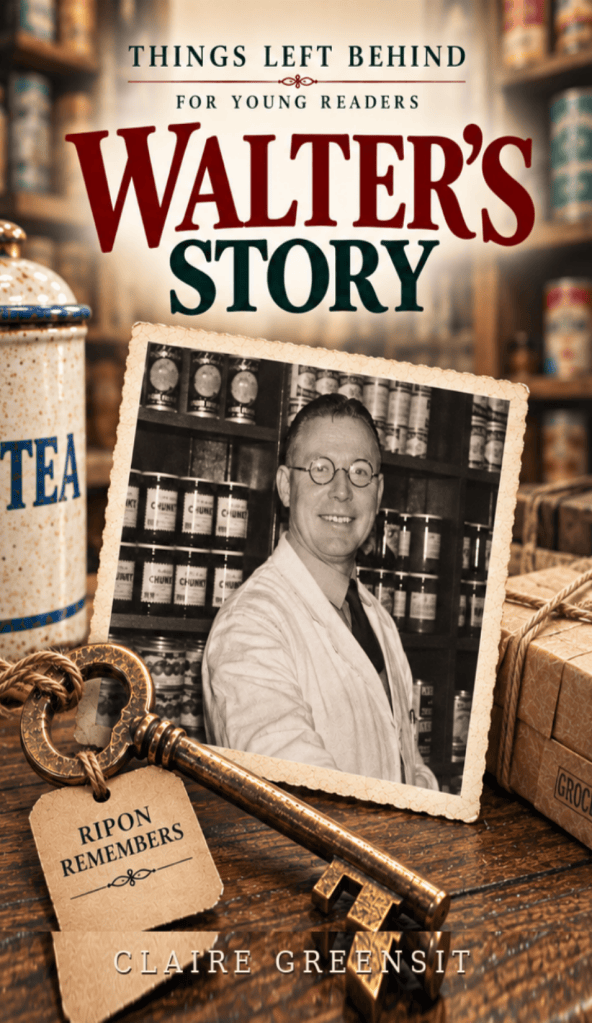
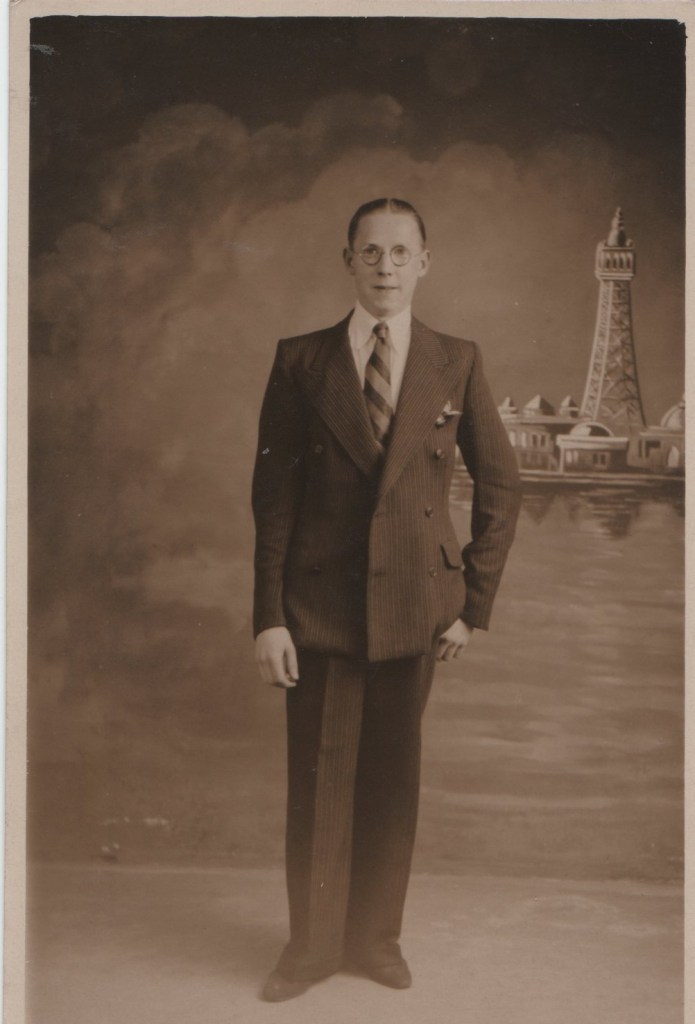
Walter was born at the end of the First World War into a family of miners. Mining had shaped generations of his family, but Walter’s mother wanted something different for her son.
At fourteen years old, Walter left school and began work in the grocery trade.
It was the beginning of a career that would last for more than fifty years.
Walter’s Story for Young Readers follows Walter from his first days learning the grocery business in the 1930s, through wartime Britain and the changing decades that followed, to a very different high street in the 1980s.
A shopkeeper’s view of a changing world
Walter’s working life gives young readers an unusual way into twentieth-century history.
The grocery shop Walter knew as a fourteen-year-old was very different from the shops children know today. Customers were served from behind a counter. Goods were weighed and wrapped. Money was counted in pounds, shillings and pence. Much of the shopping experience depended upon the relationship between the grocer and the families who came through the door.
Over Walter’s lifetime, all of that began to change.
What would Walter still recognise in a supermarket today?
What would seem completely unfamiliar to him?
Which changes made shopping easier — and what might have been lost?
By following one person across more than half a century, children can explore change and continuity in a way that is personal and tangible.
How do we know Walter’s story?
Walter’s story has been reconstructed from a range of direct sources, including his school reference, newspaper reports and family memories.
But sources do not always tell exactly the same story. Family stories can become altered as they are passed from one person to another. Details may be remembered differently, while documents can tell us only part of what happened.
That gives young readers the opportunity to ask another important historical question: How do we decide whether a memory is reliable?
Children can compare evidence, look for corroboration and consider what happens when a remembered story and a surviving document do not quite agree.
Walter’s war was fought at home
Walter’s story also gives children a different perspective on the Second World War. This is not primarily a story of battlefields. It is a story of ordinary people living and working through wartime Britain: shops, families, rationing, shortages and the practical problems of keeping everyday life going.
It helps children explore the idea that war changes the lives of people far beyond those serving in the armed forces.
From pounds, shillings and pence to Decimal Day
Walter’s world also opens the door far beyond the history curriculum.
For most of his working life, Britain did not use the decimal money children recognise today. Customers paid in pounds, shillings and pence, and a shopkeeper had to calculate prices and change using that system.
Then came Decimal Day. For Walter, it meant changing a system he had used throughout his adult life.
Could you work behind Walter’s counter?
How quickly could you calculate change using old money?
What would it feel like if the money system you had used for decades suddenly changed?
History across the curriculum
Walter’s Story for Young Readers has been designed so that learning does not stop at History.
- History — local history, the Home Front, shops and shopping, change and continuity, sources and evidence
- Mathematics — pounds, shillings and pence, calculating change and Decimal Day
- English — oral history, biography, questioning sources and writing from different viewpoints
- Geography and local studies — changing high streets and communities
- PSHE — work, aspirations, family expectations and adapting to change
An ordinary life that tells an extraordinary amount
Walter was not famous. He was a grocer.
And that is precisely why his story matters.
Through the life of one ordinary man, children can explore work, family, war, money, shops, technology and more than fifty years of social change.
Walter’s Story for Young Readers is part of The Things They Left Behind collection — using real family stories, surviving objects, documents and memories to help children discover not only what happened, but how we know.
The Teacher’s Companion
The Things They Left Behind: Teacher’s Companion brings together the unabridged Tommy, Walter and Ken stories with lesson plans, archive sources, QR-linked resources and classroom activities built around Beyond the Story Shelf’s story-led approach.
For schools and young historians
The book is particularly suited to KS2 readers and classroom teaching, with linked teaching resources and archive material available to support learning.
School workshops and online author sessions linked to Walter’s story are also available.
Coming soon from Beyond the Story Shelf.

