
A real First World War story, told through memory, evidence and the gaps in between.
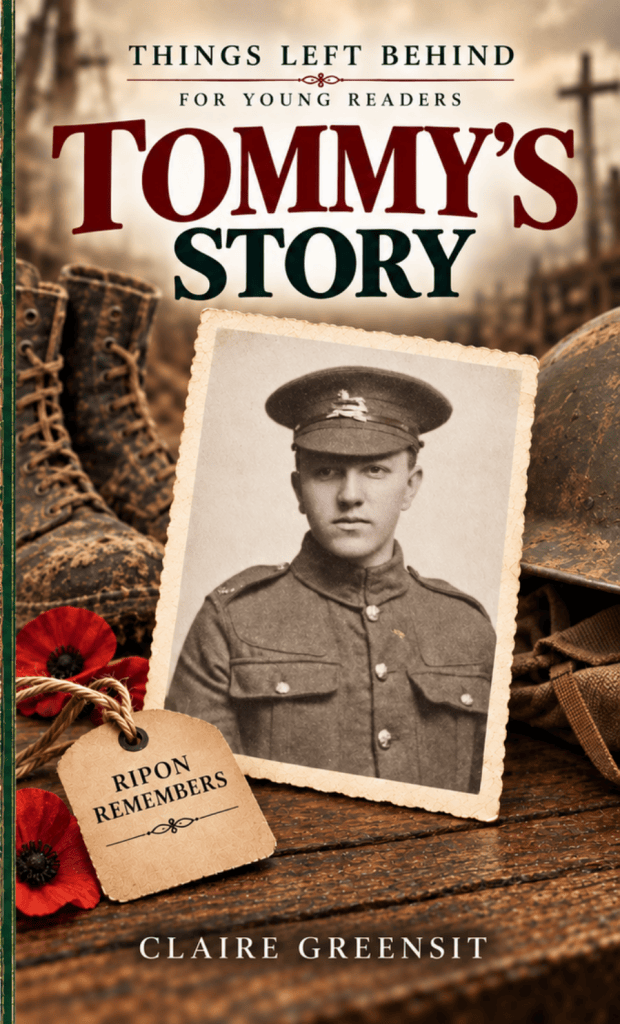
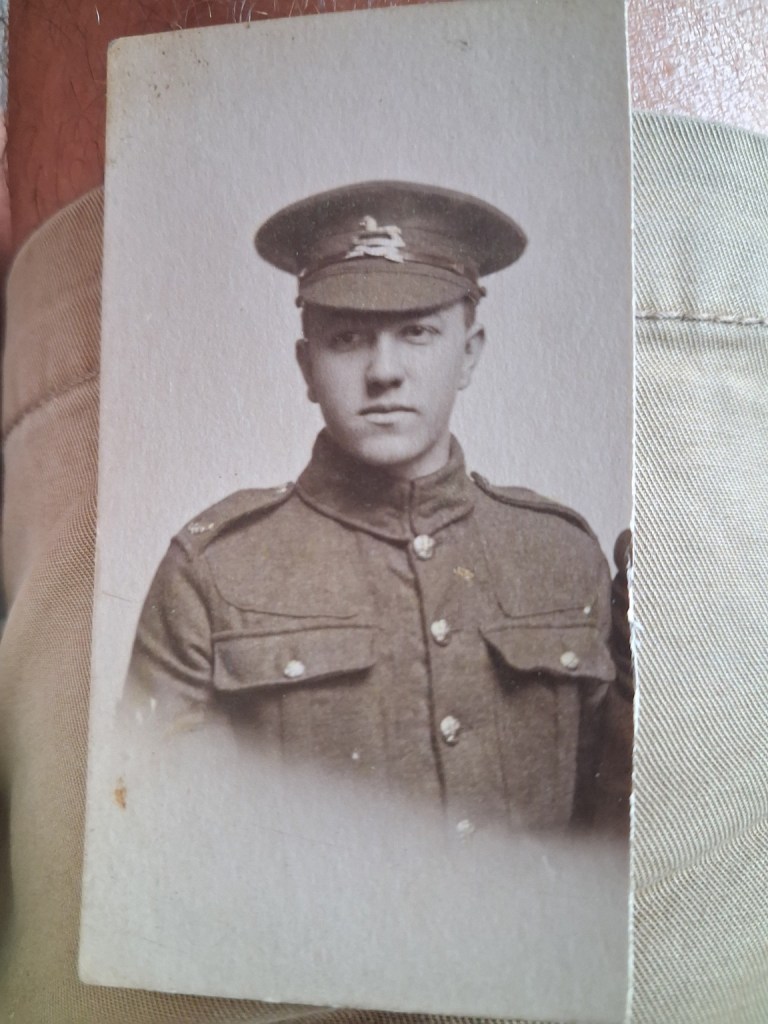
Tommy Benson was born at the very end of Queen Victoria’s reign. By the time the First World War began, he was just sixteen years old — and, like many young men, he was swept up in the excitement surrounding it.
There was just one problem.
He was too young to enlist.
So Tommy lied about his age.
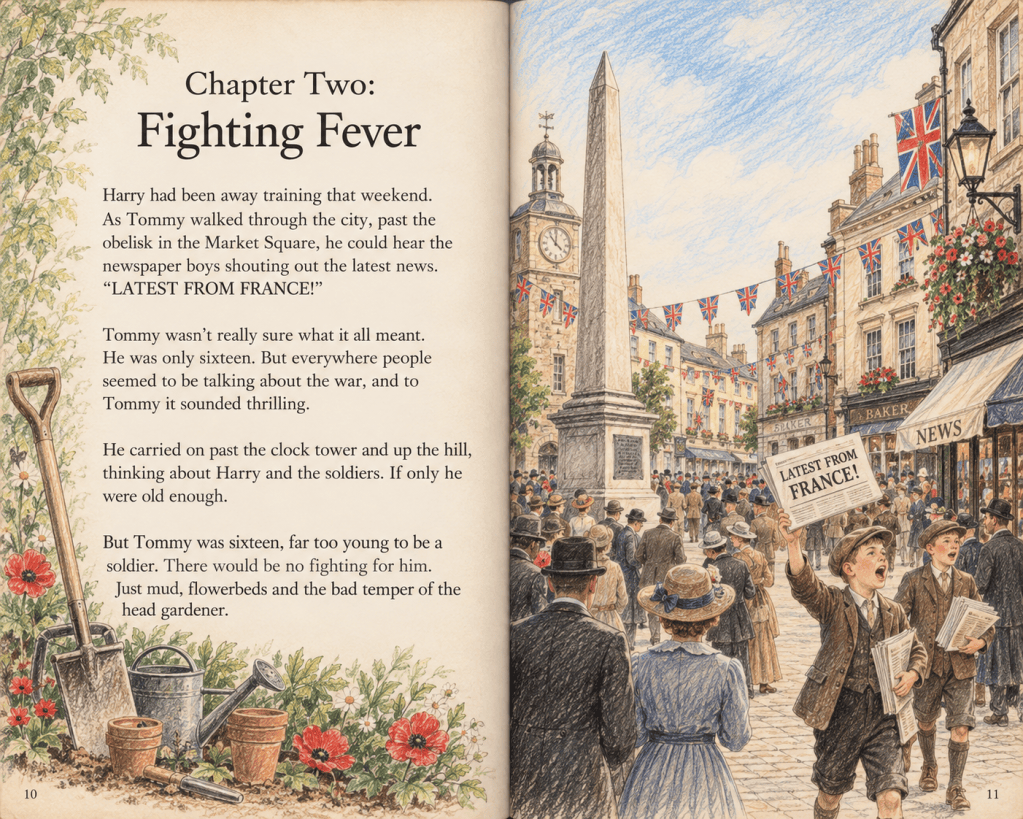
Tommy’s Story for Young Readers follows him from home to military training in Whitley Bay, then across the sea to the Western Front. Children travel with Tommy to Ypres and the Somme and discover, through his own words, what life was like for a very young soldier caught up in events far bigger than himself.
A story told in Tommy’s own words
Many years after the war, Tommy recorded his memories of his experiences. Those memories form the heart of this book.
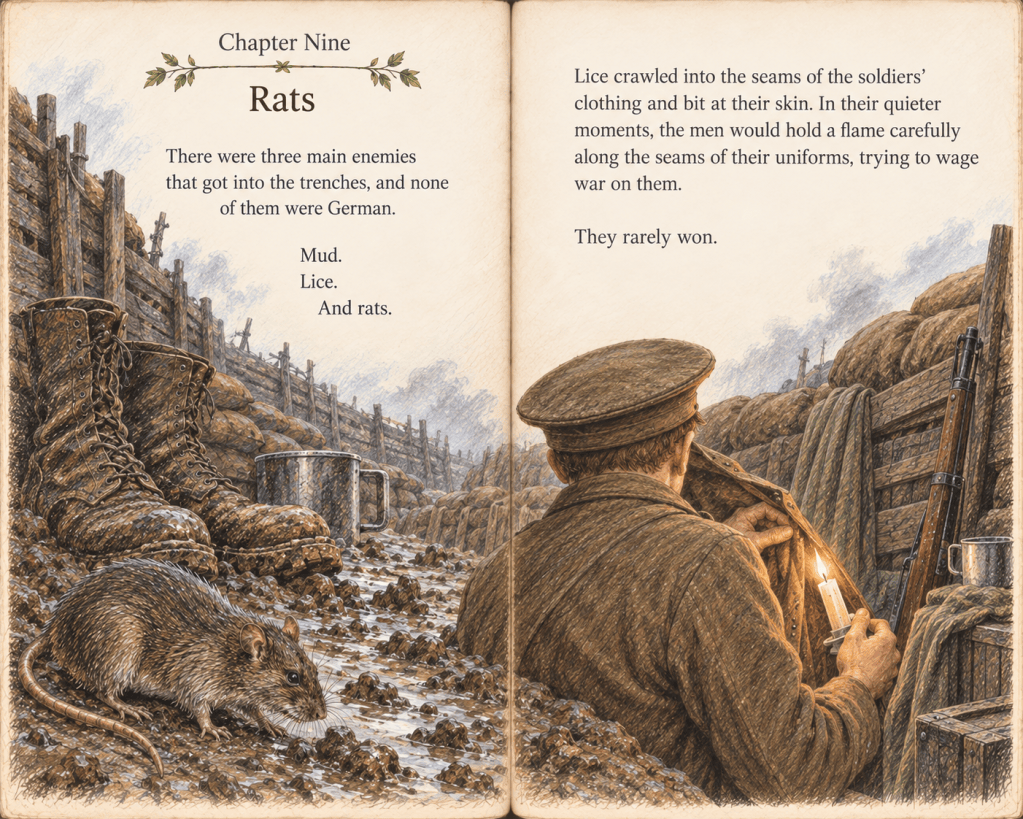
Children encounter Tommy’s own descriptions of trench life, the escapades he remembered decades later, and his experience of the Battle of Delville Wood.
But memory is complicated. Some details remain extraordinarily vivid. Others disappear. Dates become blurred. Stories change slightly as they are told and retold.
That makes Tommy’s account not only a remarkable personal story, but also an opportunity to explore an important historical question: How do we know what really happened?
History, evidence and imagination
Throughout Tommy’s Story, young readers are encouraged to think like historians.
- what Tommy himself remembered;
- what surviving documents and historical sources can confirm;
- what we can reasonably infer from the evidence;
- where there are gaps in the historical record;
- and where imagination has been used carefully to help tell the story.
Rather than presenting history as a neat collection of facts, Tommy’s story introduces children to the uncertainty that often surrounds real lives from the past.
Can a memory be true even when some of its details are wrong?
Why might someone remember one moment clearly but forget another?
When does filling a gap in a historical story become fiction?
Big questions for young readers
Tommy’s decision to lie about his age also opens up rich opportunities for discussion. Was it wrong to lie? Why were so many boys desperate to enlist? Who was responsible for stopping underage soldiers from joining? Can doing something dishonest ever feel like the right thing to the person doing it?
There are no simple answers, and that is precisely what makes Tommy’s story so valuable in the classroom.
The consequences of war
This is also a story about what happens after the battle ends.
Tommy survived the First World War, but survival did not mean returning unchanged. Through his story, children can begin to think sensitively about war, injury, loss and the ways experiences in childhood and youth can continue to shape an entire life.
And Tommy’s connection with the Somme did not end in 1918. More than seventy years later, he returned.
Based on a real life
Tommy’s Story for Young Readers is part of The Things They Left Behind collection, which brings real family stories and surviving objects, photographs, documents and memories to a new generation of readers.
The book is based on Tommy Benson’s recorded account alongside surviving historical evidence. Where the evidence tells us something, the story follows it. Where evidence allows us to make a reasonable deduction, that is treated as an inference. And where history falls silent, imagination is used carefully and transparently to bridge the gaps.
The Teacher’s Companion
The Things They Left Behind: Teacher’s Companion brings together the unabridged Tommy, Walter and Ken stories with lesson plans, archive sources, QR-linked resources and classroom activities built around Beyond the Story Shelf’s story-led approach.
For schools and young historians
Tommy’s Story for Young Readers has been created with classroom use in mind and is particularly suited to KS2 readers and history teaching.
Supporting teaching materials explore the First World War, recruitment and underage soldiers, trench life, the Battle of the Somme and Delville Wood, primary and secondary sources, memory as historical evidence, fact, inference and imagination, ethical questions surrounding truth and lying, and the long-term impact of war.
School workshops and online author sessions linked to the books and their archive material are also available.
Coming soon from Beyond the Story Shelf.

