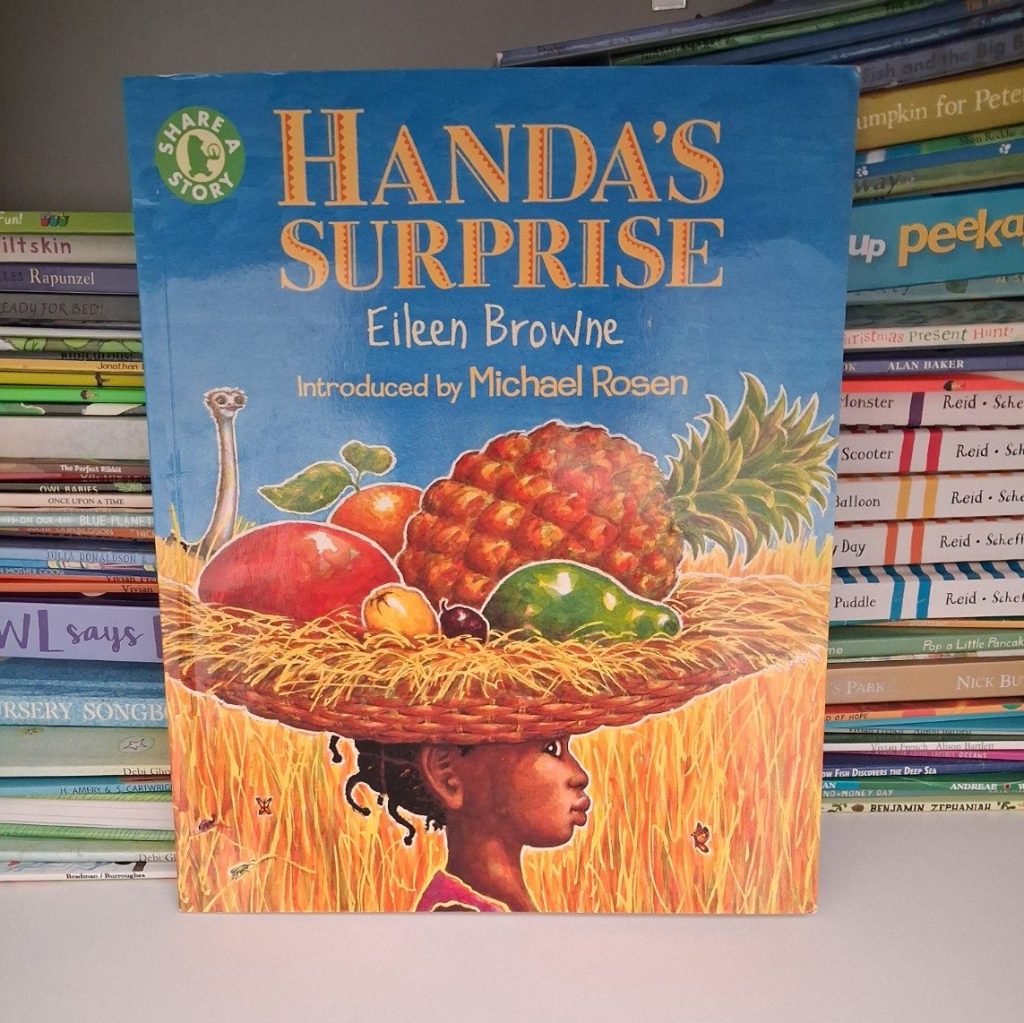
Handa’s Surprise by Eileen Browne is one of those picture books that earns its place on the shelf year after year. This post explores how the story can support learning across the curriculum for children in Reception and Key Stage 1, with subject-by-subject ideas, a grab-and-go lesson, and a rich set of Early Years suggestions.
About the book
In Handa’s Surprise by Eileen Browne, Handa sets off to visit her friend Akeyo, carrying a basket filled with seven delicious fruits. She wonders which fruit Akeyo will like best, but as she walks, a series of animals quietly take the fruits from her basket one by one.
Handa remains completely unaware of what is happening above her head. Then, through an unexpected twist, her empty basket is filled once more, creating a surprise for both Handa and Akeyo.
The story is simple, repetitive and beautifully illustrated. Young children can follow the sequence easily, anticipate what might happen next and enjoy knowing more than the main character does.
Why this book works
Handa’s Surprise is one of those books that appears simple but offers an enormous amount of learning.
The repeated pattern gives children confidence to join in, retell events and predict which animal or fruit might come next. The illustrations provide plenty to notice and discuss, while the disappearing fruit creates natural opportunities for counting and exploring one less.
The story also introduces children to a setting beyond their own immediate experience. It can open thoughtful conversations about Kenya, climate, animals, homes, journeys and the foods that grow in different parts of the world.
Real fruit makes the story particularly easy to bring to life. Children can look, touch, smell and taste, developing rich descriptive vocabulary while exploring size, weight, texture, seeds and personal preferences.
Most importantly, the learning does not need to feel forced. Literacy, mathematics, science, geography, art and design can all grow naturally from the story.
With a basket of fruit, a few animal figures and a world map, Handa’s Surprise can move far beyond story time.
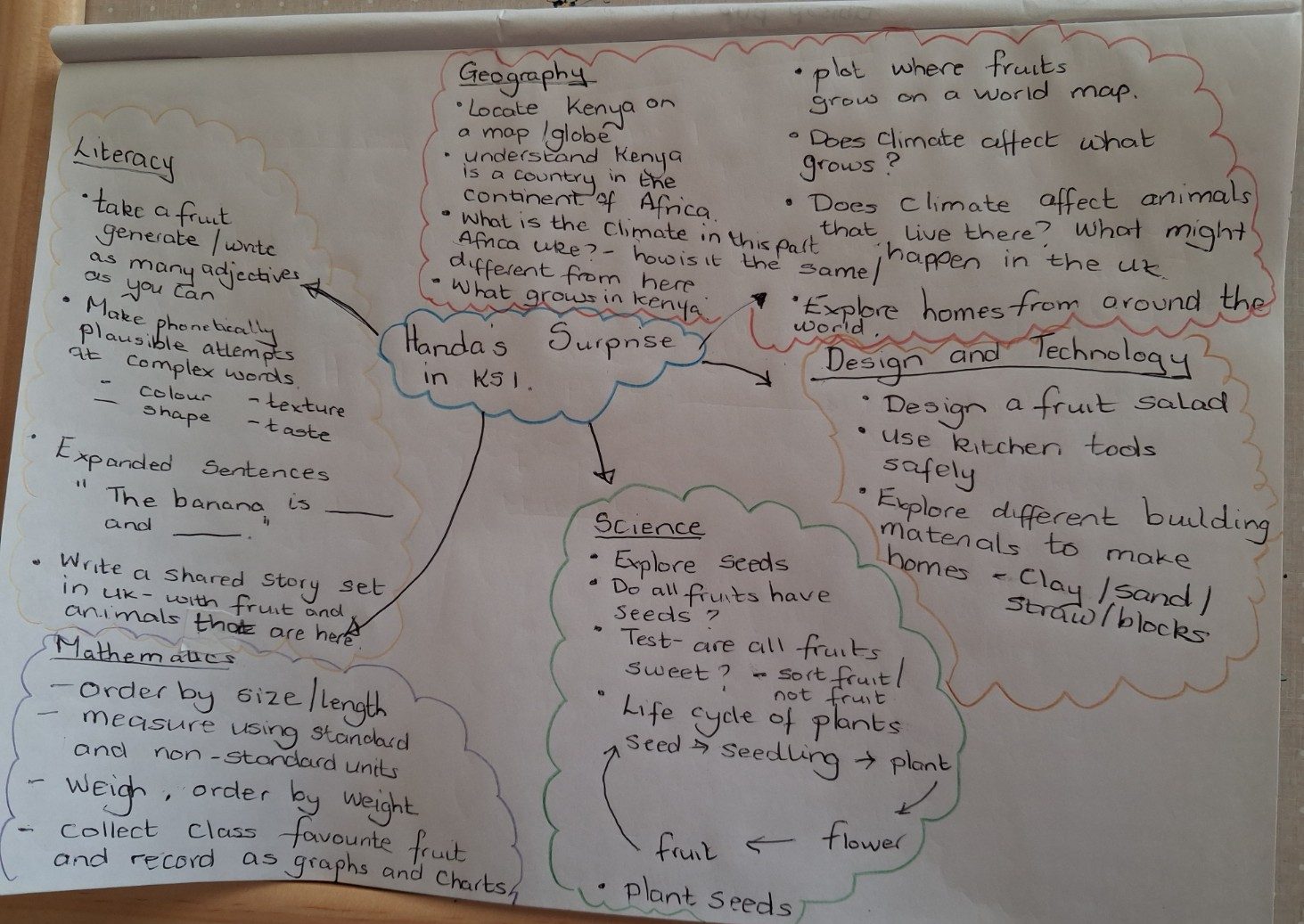
Literacy
Handa’s Surprise offers rich opportunities for developing vocabulary, sentence construction and storytelling.
Begin by exploring the fruit in the story. Give children the opportunity to look closely at real fruit or high-quality images and generate as many descriptive words as they can. Encourage them to think beyond colour and consider shape, size, texture, smell and taste. A mango might be smooth, oval, juicy and sweet, while a pineapple could be rough, spiky, heavy and sharp-smelling.
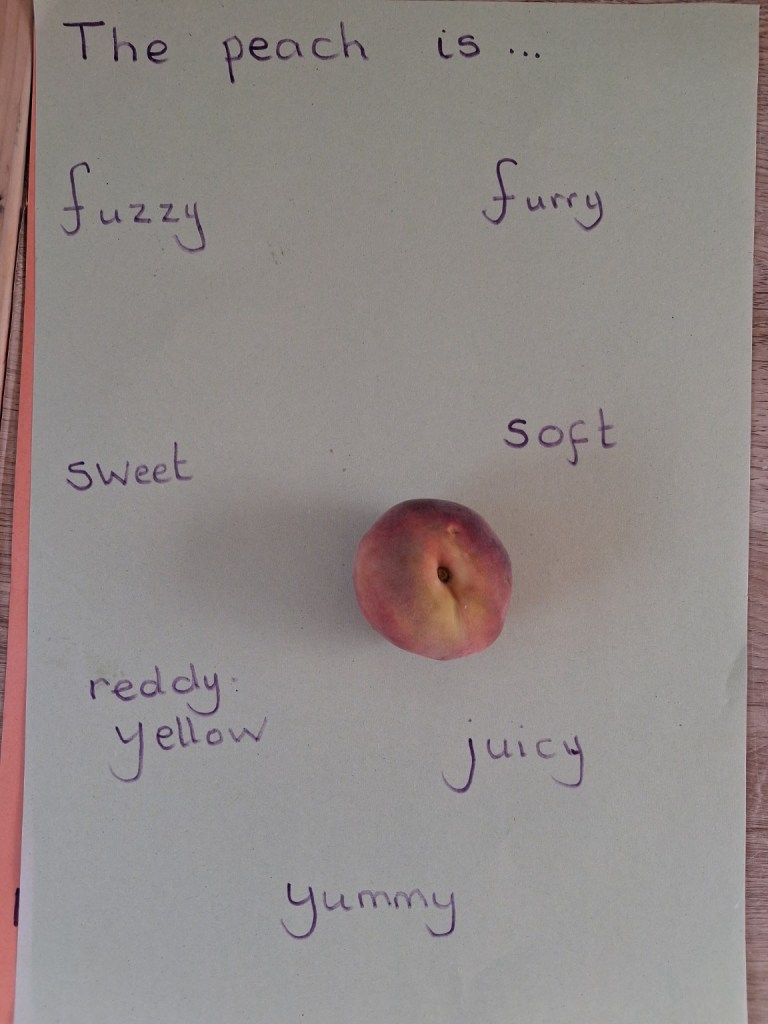
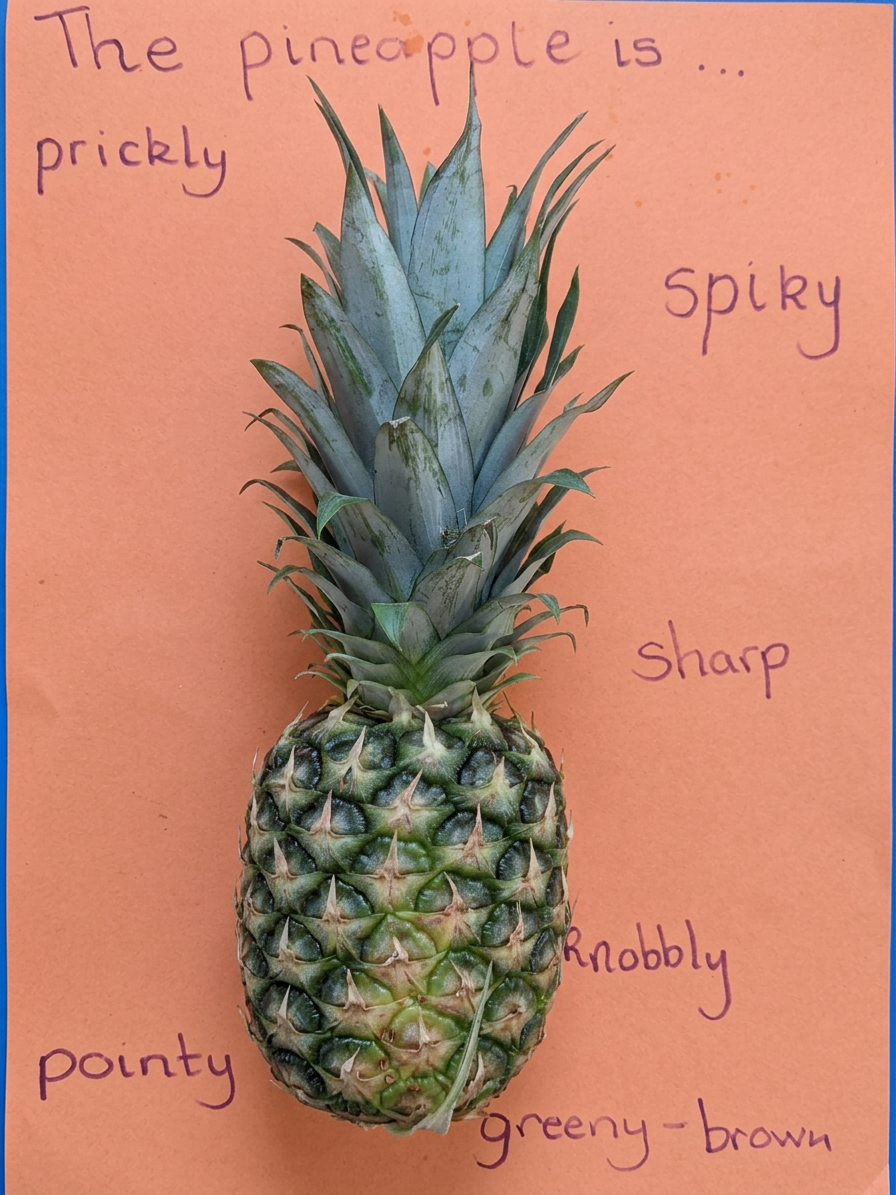
Children can then use their vocabulary to build expanded sentences, for example:
The pineapple is rough and prickly.
The soft, juicy mango is green and yellow.
This is also a useful opportunity to encourage phonically plausible attempts at less familiar words such as pomegranate, avocado and passion fruit. The focus should be on using ambitious vocabulary and applying known phonics rather than avoiding words that appear difficult to spell.
The patterned structure of the story lends itself well to retelling. Children could sequence the events, match each animal to the fruit it takes, or retell the story using a basket, fruit and animal figures. They might write captions for each part of the journey or create a simple story map to support oral rehearsal before writing.
A particularly effective extension is to create a new version of the story set closer to home. Children could choose familiar fruits and local animals, then plan what might disappear from the basket and how it is replaced. This could be written collaboratively as a shared class story before children create their own version.
For example:
Ella carried apples, pears and strawberries to her friend’s house.
A blackbird swooped down and took one of the strawberries…
This keeps the familiar pattern of the original while giving children a clear structure within which to make their own choices.
Mathematics
Handa’s Surprise provides natural opportunities for counting, comparing, measuring and recording data.
Begin with the seven fruits in Handa’s basket. Children can count the fruit, place them in order and then remove one as each animal appears. This supports secure counting and introduces the language of one less in a meaningful context.
Using real fruit, picture cards or counters, children might explore number sentences such as:
7 − 1 = 6
6 − 1 = 5
Some children may record what happens pictorially, while others can use numerals and mathematical symbols. The repeated structure of the story helps children see subtraction as a quantity becoming smaller rather than as an isolated calculation.
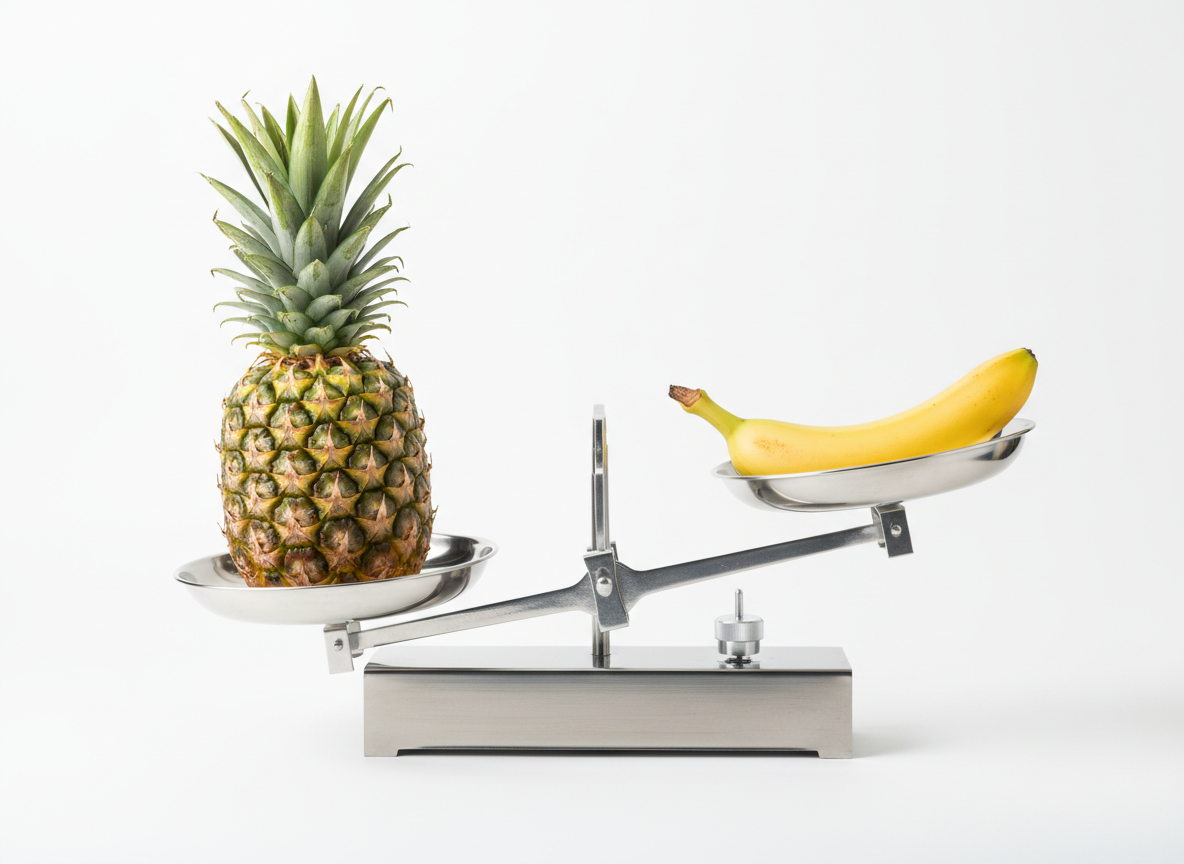
The fruits also lend themselves well to comparison and measurement. Children can order them by size, length or weight, first using direct comparison and then measuring with standard or non-standard units. They might predict which fruit is heaviest before checking with balance scales, or measure how many cubes long each fruit is.
Useful questions include:
- Which fruit is the longest?
- Which is the heaviest?
- Are the largest fruits always the heaviest?
- How could we prove it?
A class fruit-tasting session can also generate meaningful data. Children could vote for their favourite fruit and represent the results using a tally chart, pictogram or simple block graph. They can then interpret the information by identifying the most and least popular choices and comparing how many children selected each fruit.
This allows the mathematics to grow directly from the story and from children’s own experiences of handling and tasting the fruit.
Science
Handa’s Surprise provides an engaging starting point for exploring fruits, seeds and the life cycle of flowering plants.
Begin by cutting open a selection of fruits and inviting children to look closely at what is inside. They can compare pips, seeds and stones, noticing differences in size, shape, colour and number. A mango has one large stone, while a passion fruit contains many small seeds.
Children could sort the fruits according to what they find inside and discuss whether all fruits contain seeds. This also opens up an interesting scientific question:
Are all fruits sweet?
Children may be surprised to discover that foods such as tomatoes, peppers, cucumbers and avocados are fruits because they contain seeds, even though they are not usually eaten as sweet foods.
The story can then lead into the life cycle of a flowering plant. Children can sequence the stages:
seed → seedling → plant → flower → fruit
Planting suitable seeds gives children the opportunity to observe change over time. They can make predictions, record growth and consider what plants need in order to survive, including light, water, warmth and space.
Useful questions might include:
- Which fruits have the most seeds?
- Why do fruits contain seeds?
- Will every seed grow?
- What does a seed need before it can begin to grow?
- How does a flower become a fruit?
This turns the fruit in the story into the starting point for real scientific observation, comparison and enquiry.
Geography
Handa’s Surprise offers a natural opportunity to introduce children to Kenya and to develop their understanding of countries, continents, climate and place.
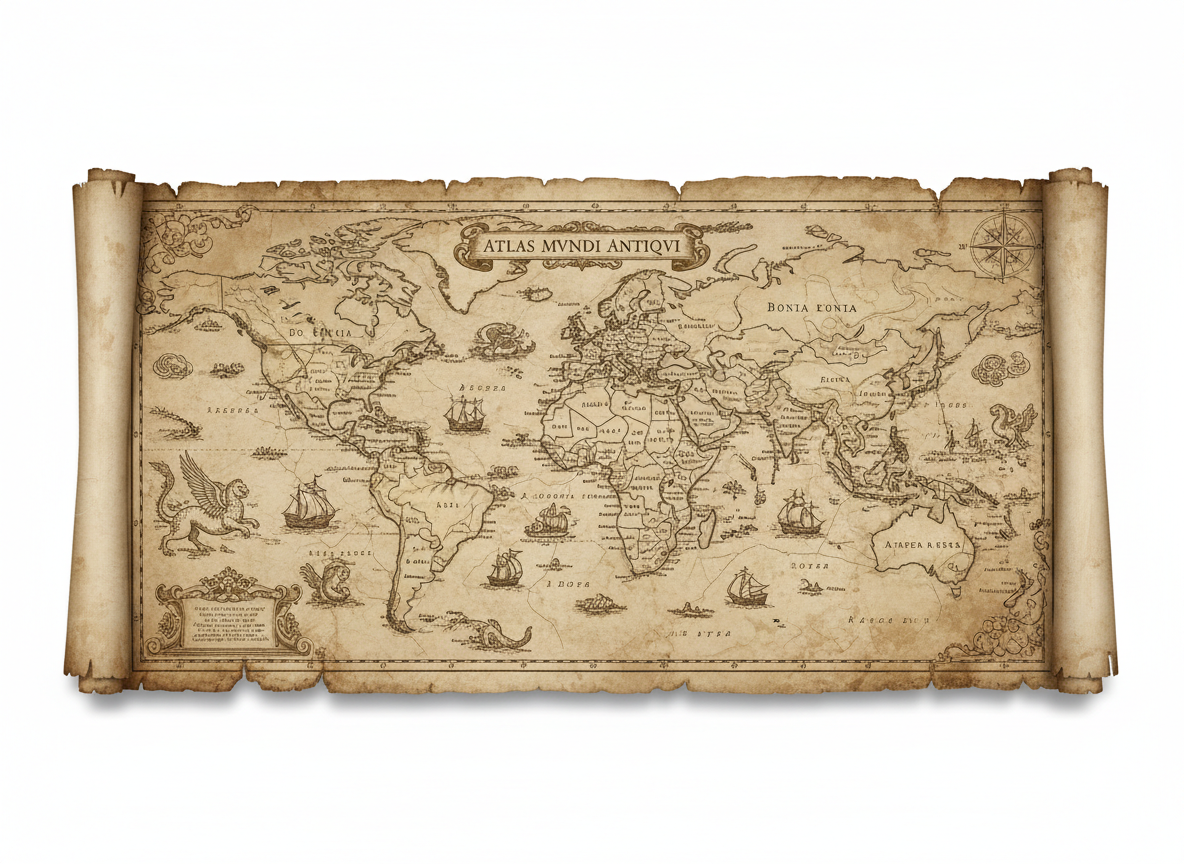
Begin by locating Kenya on a globe or world map. Establish that Kenya is a country and that it is part of the continent of Africa. Children could also locate the United Kingdom and compare the two positions.
Use the illustrations to look closely at the setting. What can children notice about the landscape, weather, plants, animals, homes and the way Handa travels? Encourage careful observation while avoiding the idea that one story represents the whole of Kenya, or that Kenya represents the whole of Africa.
Children might compare the story setting with their own local area:
- What looks similar?
- What looks different?
- Which animals might we see locally?
- Which fruits grow well in each place?
- How might the climate affect what people grow, wear or build?
The fruits in Handa’s basket can lead into simple map work. Children could research where bananas, pineapples, mangoes, avocados and passion fruit grow, then place pictures or labels on a world map. This helps them recognise that much of the food they eat may have travelled a long way before reaching a local shop.
Older children could explore the relationship between climate and produce. They might investigate why tropical fruits need warmth and compare this with fruits commonly grown in the United Kingdom, such as apples, pears and strawberries.
A useful enquiry question might be:
How does where we live affect what can grow there?
This allows children to move beyond simply locating Kenya and begin considering how climate, landscape, plants, animals and human life are connected.
Design and Technology
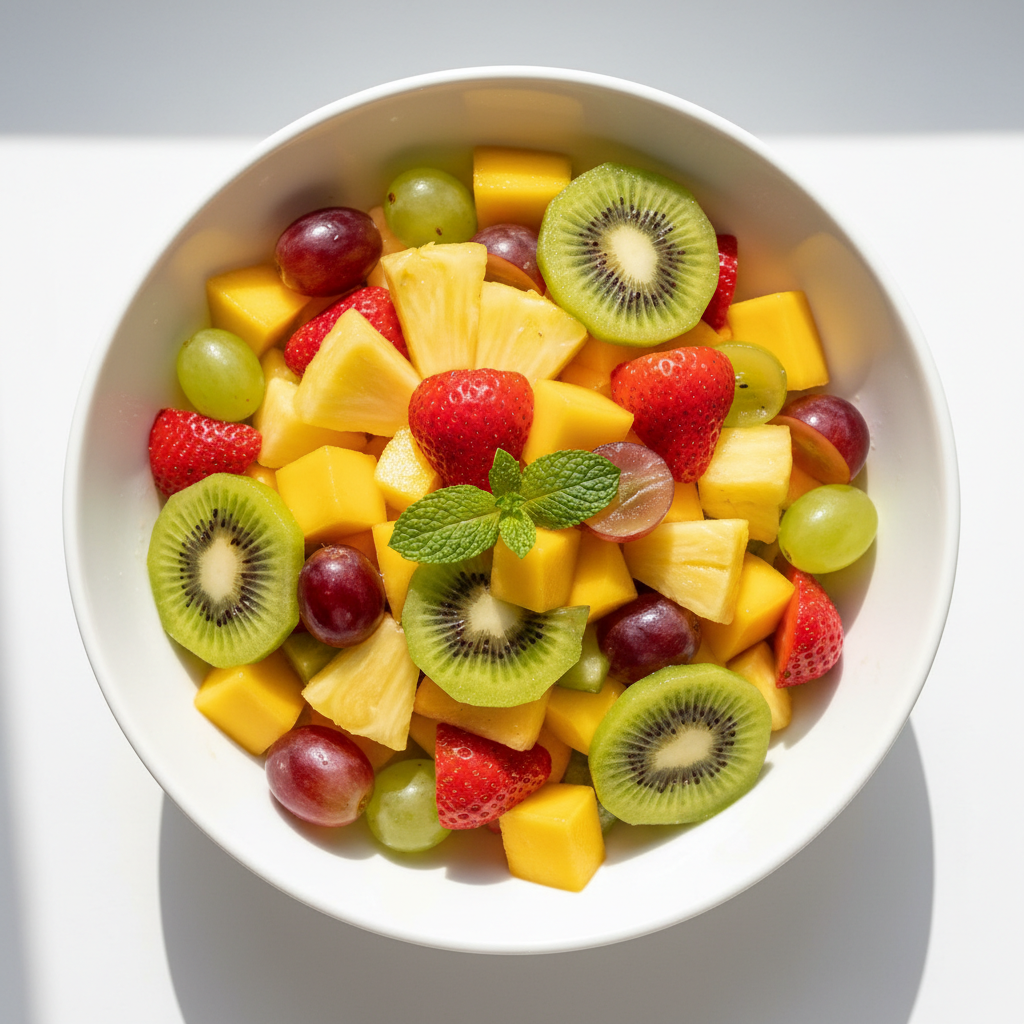
Handa’s Surprise offers a natural context for designing and making food products, particularly a simple fruit salad, fruit kebab or tasting plate.
Begin by exploring the fruits in the story. Children can consider their colour, flavour, texture and size before deciding which fruits would work well together. They might taste a small selection and record their preferences before creating a simple design for their finished product.
Encourage children to think about a clear purpose and user. For example:
Can you design a colourful fruit salad for a friend?
Can you create a fruit snack that includes different tastes and textures?
Children can draw and label their design, list the ingredients they need and explain why they have chosen them. They might aim to include contrasting colours, a mixture of soft and crunchy textures, or fruits that are sweet and sharp.
During the making stage, children can practise:
- washing and preparing ingredients;
- peeling where appropriate;
- using child-safe knives and other tools with supervision;
- chopping fruit into suitably sized pieces;
- combining and presenting ingredients carefully;
- following good hygiene routines.
They can then evaluate the finished product by considering:
- Did it look like the original design?
- Were the chosen fruits a good combination?
- Was it easy and safe to eat?
- What would they change next time?
The story can also inspire a construction challenge. Children might investigate the homes shown in the illustrations and compare them with familiar buildings before designing and making a model home using card, boxes, fabric or construction materials. They can consider which materials would make the structure strong, stable and suitable for its environment.
Both activities allow children to move through the design process of exploring, designing, making and evaluating, while keeping the learning closely connected to the story.
Grab-and-go lesson: Describe the fruit
Learning objective
To use precise vocabulary to describe a fruit.
You will need
A copy of Handa’s Surprise, a small selection of fruit, paper or whiteboards, and pencils.
Introduction
Read or revisit the part of the story where Handa thinks about the fruit in her basket.
Show the children one fruit and ask them to describe it. Encourage them to move beyond colour and think about:
- shape;
- size;
- texture;
- smell;
- weight;
- taste.
Record their words around the fruit.
Main activity
Give each pair or group a fruit to investigate. Children can look closely, handle it and smell it before generating descriptive vocabulary.
Model how to turn individual words into a sentence:
The pineapple is rough, heavy and prickly.
The smooth, oval mango has soft, juicy flesh.
Year 1 children could orally rehearse and write one or two descriptive sentences. Year 2 children could use expanded noun phrases and carefully chosen verbs or comparisons.
Plenary
Read some descriptions aloud without naming the fruit. Can the rest of the class identify it from the clues?
Optional extension
Cut open the fruits and ask children to improve their descriptions using what they discover inside. They could then write a short riddle:
I am rough on the outside and yellow within.
I have a leafy crown. What am I?
Early Years ideas
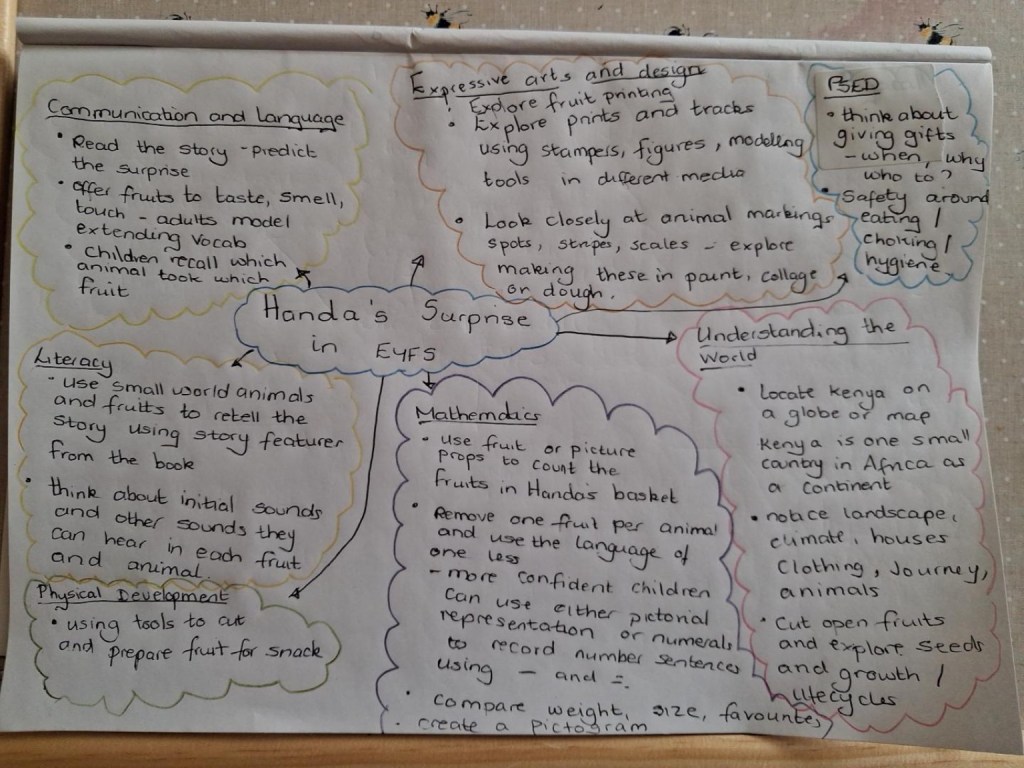
While the KS1 activities lend themselves to clear subject links, Handa’s Surprise is equally rich in Early Years, where learning can grow through shared reading, practical exploration and play. Real fruit, story props and simple additions to continuous provision allow children to revisit the story while developing language, early mathematics, physical skills and curiosity about the world.
Claire’s final thoughts
As a teacher in Reception and, for the past sixteen years, in Early Years, Handa’s Surprise is a book I have returned to time and time again. Its simple, repetitive story offers so many opportunities for children to talk, investigate, taste, count and create.
In our Montessori environment, I used the story to enrich Practical Life activities. Preparing the fruit gave children a meaningful reason to refine skills such as washing, peeling, chopping and slicing, while also widening their experience of unfamiliar foods, flavours and textures.
The display below placed the real fruit alongside simple word labels. It enabled my more confident readers to use their knowledge of letters and sounds to match and label the fruit independently, while giving all the children opportunities to handle the fruit, ask questions and develop new vocabulary.
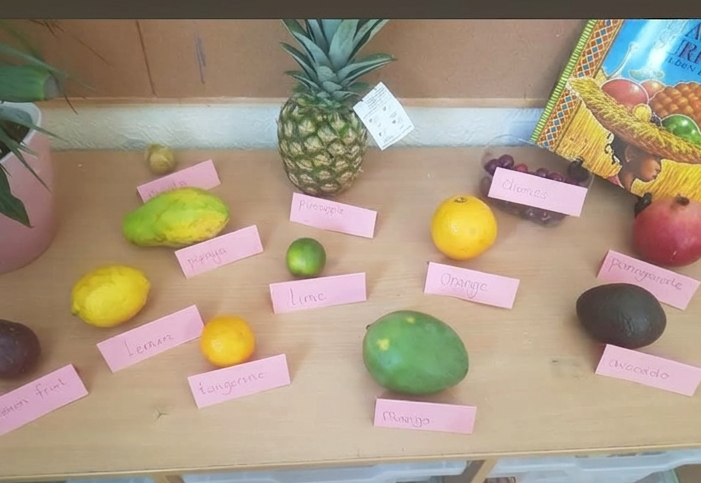
As a next step from the tasting activity, we introduced a weekly tasting experience to help children become more willing to engage with unfamiliar tastes and textures. Over time, this gave them repeated, low-pressure opportunities to look, smell, touch and taste new foods, building confidence as well as broadening their experiences.
Within the Montessori classroom, continent boxes also give children opportunities to explore animals, artefacts, clothing and other materials associated with different parts of the world. Handa’s Surprise provides a natural stepping stone into wider learning about Kenya, Africa and the continents, while helping children understand that each continent contains many different countries, communities and cultures.
That is what makes Handa’s Surprise so enduring. It begins with a beautifully simple story, but can grow into rich, practical learning shaped by the children’s curiosity.
Handa’s Surprise shows how one familiar story can open the door to language, mathematics, science, geography, creativity and practical life—continuing the learning far beyond the final page.
Communication and Language
In Early Years, Handa’s Surprise does not need to become a series of formal lessons. A basket of fruit, some animal figures and plenty of time to talk, explore and play can take the learning in all sorts of directions.
Read the story together, pausing to predict what the surprise might be and to recall which fruit each animal takes.
Offer real fruits for children to look at, touch, smell and taste. Encourage them to describe what they notice, introducing and extending vocabulary linked to colour, shape, size, texture, smell and flavour.
Words might include:
smooth, rough, prickly, fuzzy, juicy, sweet, sharp, soft, hard and crunchy
Adults can model fuller sentences from the children’s ideas:
“The pineapple feels rough and prickly.”
“The peach is soft, round and fuzzy.”
Literacy
Use a basket, toy animals and real or pretend fruit to retell the story. Children can sequence the events, match each animal to the fruit it takes and recreate Handa’s journey through small-world play.
Notice the initial sounds in the names of the fruits and animals. Children might sort pictures by sound, match objects to initial letters or create simple alliterative phrases.
Encourage mark-making linked to the story, such as labelling fruit, making shopping lists, writing signs for a fruit stall or drawing a story map.
Mathematics
Count the seven fruits in Handa’s basket, then remove one each time an animal takes a piece. Use practical objects to explore one less and early subtraction.
Children can record what happens using objects, drawings, marks or simple number sentences:
7 − 1 = 6
Compare fruits by size, length and weight. Children might predict which fruit is heaviest before checking with balance scales.
A fruit-tasting activity can also lead to a simple pictogram showing the class’s favourite fruit. Talk together about which fruit is most popular, which is least popular and whether any have the same number of votes.
Understanding the World
Locate Kenya on a globe or world map and talk about where the story is set. Look closely at the illustrations and notice the landscape, weather, animals, homes and plants.
Explore the fruits from the story. Cut them open and look for seeds, pips or stones. Compare their size, shape, colour and number.
Plant suitable seeds and observe what happens over time. Talk about what plants need to grow, including water, light, warmth and space.
Personal, Social and Emotional Development
Encourage children to explore unfamiliar fruits without pressure. Looking, touching or smelling can be an important first step before tasting.
Talk about how people enjoy different flavours and textures, and reinforce that it is acceptable to have different preferences.
Share prepared fruit together, encouraging turn-taking, generosity and consideration for others. The story also offers opportunities to talk about friendship, giving and Handa’s thoughtful decision to take fruit to Akeyo.
Physical Development
Prepare a simple fruit salad or tasting plate. With close adult supervision, children can wash fruit, peel suitable items and use child-safe tools to chop or slice.
Talk about safe food preparation and eating, including washing hands, sitting down to eat, chewing carefully and cutting food into suitably small pieces.
Children can also develop fine-motor control by transferring fruit with tongs, using scoops, threading pieces of pretend fruit or manipulating playdough.
Expressive Arts and Design
Use cut pieces of fruit for printing. Explore which fruits make clear prints and what happens when they are cut in different directions.
Children can experiment with colour, repeated shapes and patterns, or combine prints to create their own designs.
Animal figures can also be pressed into paint, dough or sand to make tracks. Children might compare the marks, create trails or use animal movements, sounds and instruments to retell the story.
What about continuous provision?
Add baskets, fruit, story figures and animals to the small-world or role-play areas so children can retell and adapt the story independently.
A fruit stall could include labels, shopping lists, bags, scales, coins and baskets. In the investigation area, children could examine fruit with magnifiers, sort seeds or compare textures. Fruit, dough, paint and printing materials could be added to the creative area, while scales, counters and fruit models could support mathematical exploration.
These small additions allow the story to remain part of the environment long after the shared reading has finished.
You can find Handa’s Surprise by Eileen Browne on Amazon.
Taking it further
One of the most valuable aspects of Handa’s Surprise is the way it can encourage children to look beyond the fruit basket and think more broadly about people, place, culture and creativity.
This could be a lovely starting point for learning about Kenya, while also helping children understand that Africa is a vast and diverse continent made up of many different countries, languages, traditions and communities.
Children might begin by exploring photographs, music, artefacts, fabrics and artwork linked to Kenya. They could look closely at the bright colours and patterned cloth often seen in photographs and use these as inspiration for their own designs. This could lead naturally into textile work, such as creating patterned paper, simple weaving, batik-inspired designs or tie-dye t-shirts.
There may also be opportunities to explore the Maasai people as one Kenyan community, perhaps looking at clothing, beadwork, pattern and colour. This should sit within the wider understanding that no one group represents all of Kenya.
Music and movement could also grow from the story. Children might listen and respond to African drumming, explore pulse and rhythm using percussion instruments, or create movement inspired by the animals and journey in the story. If you choose to widen the musical exploration beyond Kenya, this could include listening to music from other parts of Africa, such as Ladysmith Black Mambazo, and discussing how different styles create different moods and responses. Connections to familiar texts such as The Lion King may also help children engage, though this works best as a creative springboard rather than as a representation of Kenyan life.
These wider experiences can help children see that stories do not exist in isolation. A simple picture book can open the door to geography, music, art, textiles and respectful cultural exploration.
From fruit tasting to fabric design, drumming to map work, Handa’s Surprise can become the starting point for a rich and memorable cross-curricular project.


Leave a comment