About the book
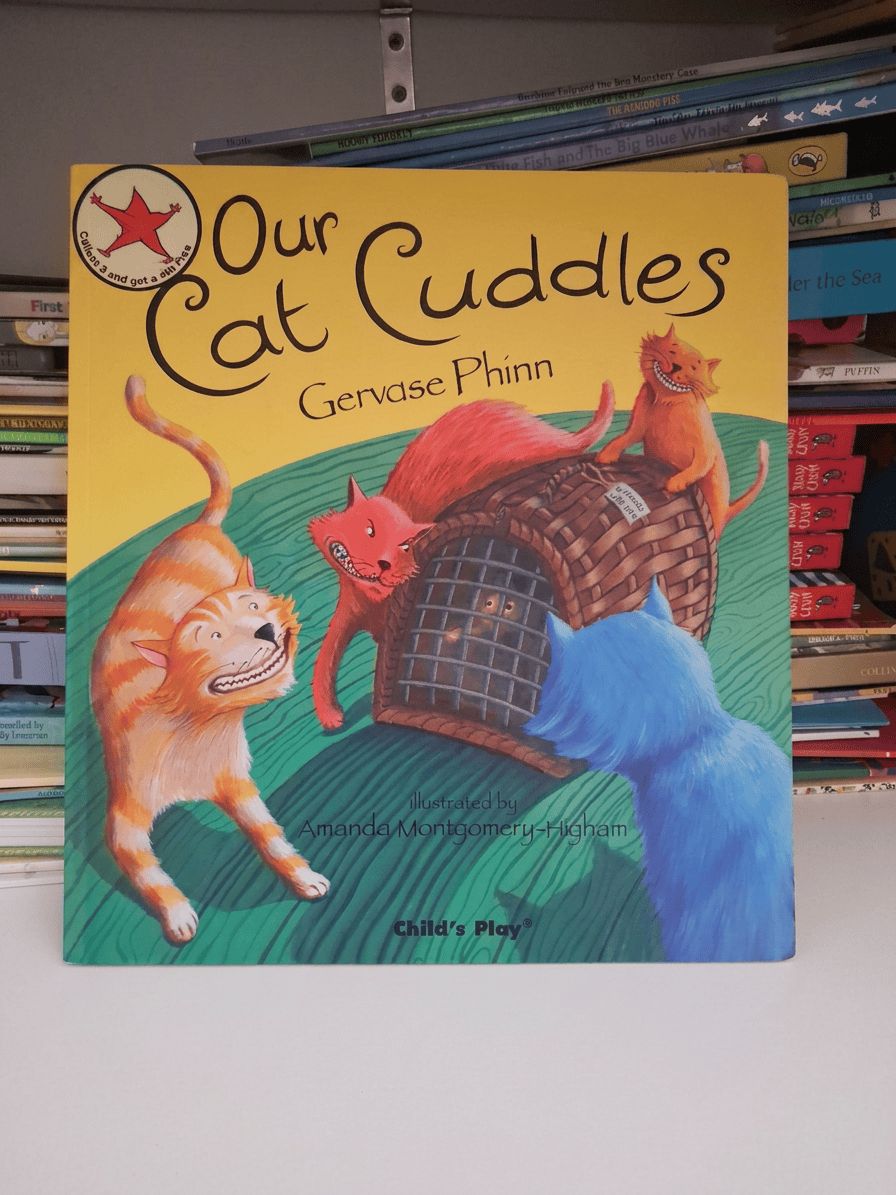
Our Cat Cuddles, written by Gervase Phinn, is a lively story full of humour and wit. It follows a family as they choose a pet and quickly discover that life with Cuddles is not quite what they imagined.
Why this book works
This book has lively, rhyming text packed with rich descriptive language. Its many adjectives make it particularly useful for exploring character, description and speech, while the humour and exaggerated illustrations give children plenty to notice, discuss and enjoy.
Beyond these direct literacy links, Our Cat Cuddles opens up much wider opportunities to explore animal care, rescue shelters and the responsibilities involved in choosing and looking after a pet.
Key Stage 1 Curriculum Web
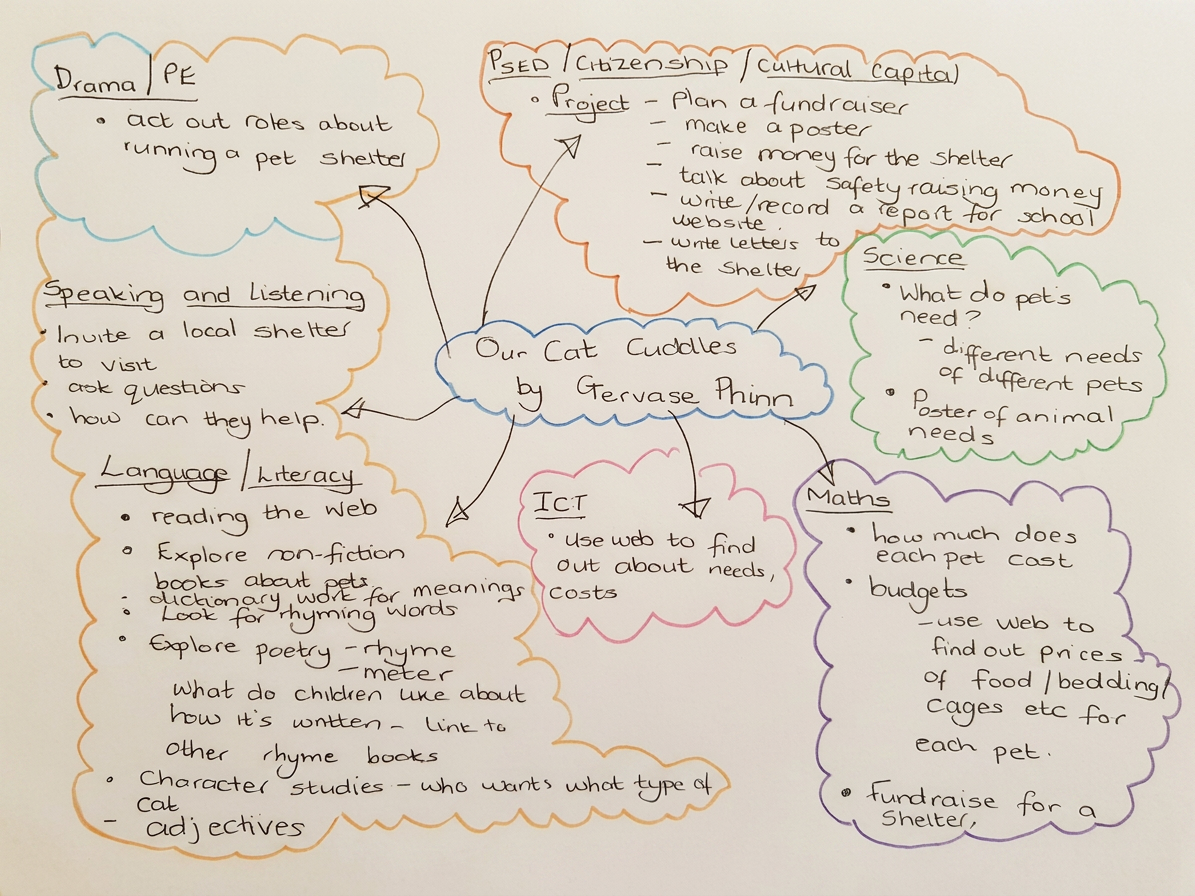
Key Stage 1 learning ideas
Literacy
The lively rhyming text provides plenty of opportunities to explore language, character and description.
Children could begin by collecting adjectives used to describe Cuddles and the other characters. They might sort the words according to appearance, behaviour or personality before using them to create character profiles.
The story also lends itself to exploring rhyme and rhythm. Children could identify rhyming words, build their own rhyming strings and investigate how the pattern of the text helps the story flow. More confident writers might create an additional verse featuring a different pet.
Speech provides another useful focus. Children can discuss what each character wants, how their feelings change and what they might say at different points in the story. They could add speech bubbles to an illustration or use role play before writing a short conversation.
The book also offers opportunities to:
- use dictionaries to investigate unfamiliar vocabulary;
- write descriptive sentences about cats or other pets;
- create a missing-pet poster;
- write instructions explaining how to care for an animal;
- compose a persuasive letter encouraging someone to support a rescue shelter.
Science
Use the story as a starting point for exploring what animals need to remain healthy and safe.
Children might identify the basic needs shared by pets, including food, clean water, shelter, exercise, rest and appropriate care. They can then compare different animals and consider why a cat, rabbit, fish and dog cannot all be cared for in the same way.
Pictures, information books or animal models can be sorted according to different criteria, such as:
- number of legs;
- wings or no wings;
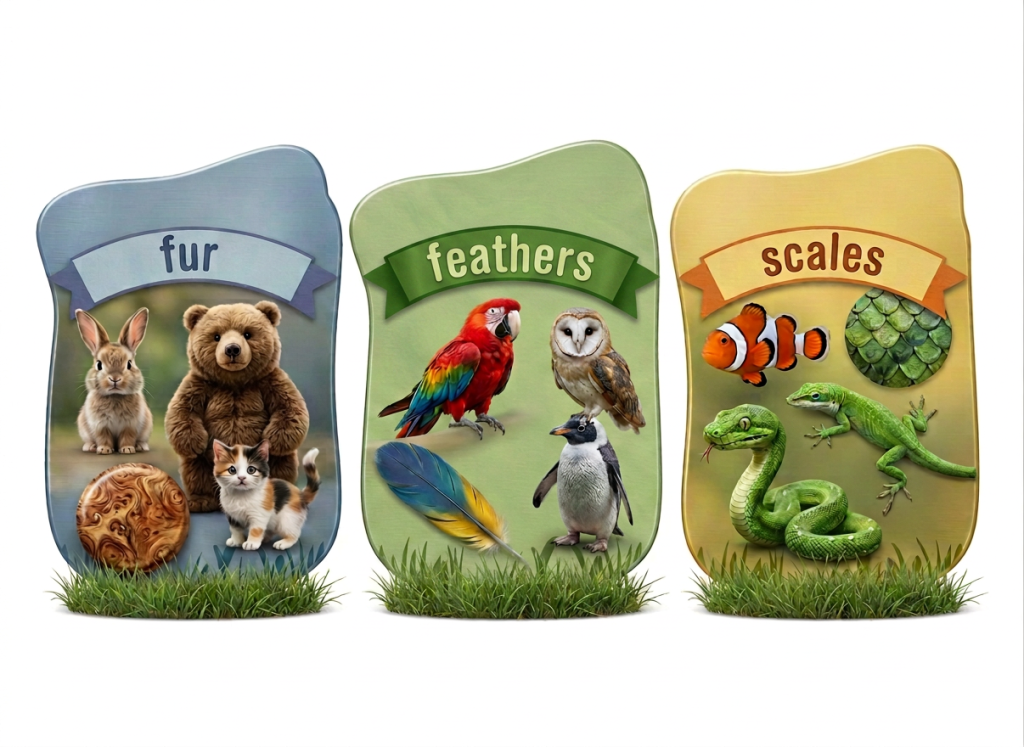
- fur, feathers or scales;
- pet, farm or wild animal;
- similar and different care needs.
Children could use what they discover to create a poster, leaflet or simple pet-care guide.
Mathematics and computing
Find out which pets children have at home and represent the results using a tally chart, pictogram or block graph. Children can compare the groups and use mathematical language such as more, fewer, most, least and equal.
The story can also lead into a pet-budgeting challenge. Children could choose a pet and use books, catalogues or carefully selected websites to investigate the likely cost of:
- food;
- bedding;
- bowls or cages;
- toys;
- veterinary treatment;
- vaccinations;
- insurance.
Younger children might compare and add simple prices, while older pupils could calculate a weekly or monthly total.
This helps children understand that choosing a pet involves an ongoing financial commitment as well as affection.
PSED and citizenship
At the heart of the story is the question of responsibility.
Discuss what it means to care for a living thing and why an animal’s needs must continue to be met even when looking after it becomes difficult or inconvenient. Children could consider what families should think about before choosing a pet and why some animals eventually need the help of rescue shelters.
Useful questions might include:
- What should someone find out before getting a pet?
- Who will care for it every day?
- What happens during holidays?
- What if the animal becomes ill?
- Why might a pet need to be rehomed?
- How can rescue organisations help?
Children could work together to create a responsible pet-owner checklist.
Drama, speaking and listening
Role play can help children explore the feelings and motivations of the characters.
They might:
- hot-seat a character from the story;
- act out a family discussion about choosing a pet;
- interview someone pretending to work at an animal shelter;
- perform a scene in which Cuddles causes trouble;
- create a freeze-frame showing how different characters feel.
Children could also prepare questions for a real visitor from a local animal charity or veterinary practice.
Grab-and-go lesson: Choosing the right pet
Learning objective
To consider the needs of different animals and explain which pet would be suitable for a particular person or family.
You will need
Pictures or information cards showing a range of pets, large sheets of paper and pencils.
Introduction
Revisit the family’s decision to choose Cuddles. Discuss what they expected and why things did not go quite as planned.
Ask children:
- collect food, blankets or toys;
- design posters and publicity;
- organise a sponsored event;
- hold a cake stall;
- calculate prices and handle coins;
- count and record the total raised;
- write a report for the school website or newsletter;
- compose a shared thank-you letter;
- send the final donation to the organisation.
What should a family find out before choosing a pet?
Collect children’s ideas, including space, time, cost, exercise, food, lifespan and daily care.
Main activity
Give each group a simple family scenario, such as:
- a family living in a small flat;
- someone who is away from home for much of the day;
- a family with a large garden;
- a person who wants a quiet pet;
- a family able to offer plenty of time and exercise.
Children consider several possible pets and decide which would be most suitable. They should explain their choice using evidence about the animal’s needs.
They might complete the sentence:
We think a ______ would be a good pet because ______.
More confident children can also explain why another animal would not be appropriate.
Plenary
Groups present their recommendation to the class. Discuss whether there can be more than one sensible answer and why responsible choices depend on both the animal and the owner.
Optional writing outcome
Children create a short pet-advice leaflet entitled:
Before You Choose a Pet…
Taking it further: From story to action
Our Cat Cuddles could become the starting point for a wider project supporting a local animal shelter or animal charity.
Begin by finding out what rescue organisations do and why animals may need their help. A visitor from a shelter, veterinary practice or animal charity could speak to the children about animal care and answer prepared questions.
The project can then grow from the children’s ideas. They might decide to:
- collect food, blankets or toys;
- design posters and publicity;
- organise a sponsored event;
- hold a cake stall;
- calculate prices and handle coins;
- count and record the total raised;
- write a report for the school website or newsletter;
- compose a shared thank-you letter;
- send the final donation to the organisation.
In my own setting, a visit connected with Guide Dogs developed naturally into a much wider project. The children organised a cake stall, used coins in a real context, counted the money they had raised and composed a shared letter thanking the visitor and explaining that they were sending their donation.
The strength of a project like this is that the learning has a genuine purpose. Children are not pretending to use money or write a letter: their calculations, words and decisions contribute to something real.
Sometimes the richest learning begins with a story and grows when children realise they can use their ideas to make a difference.
Early Years Learning Opportunities
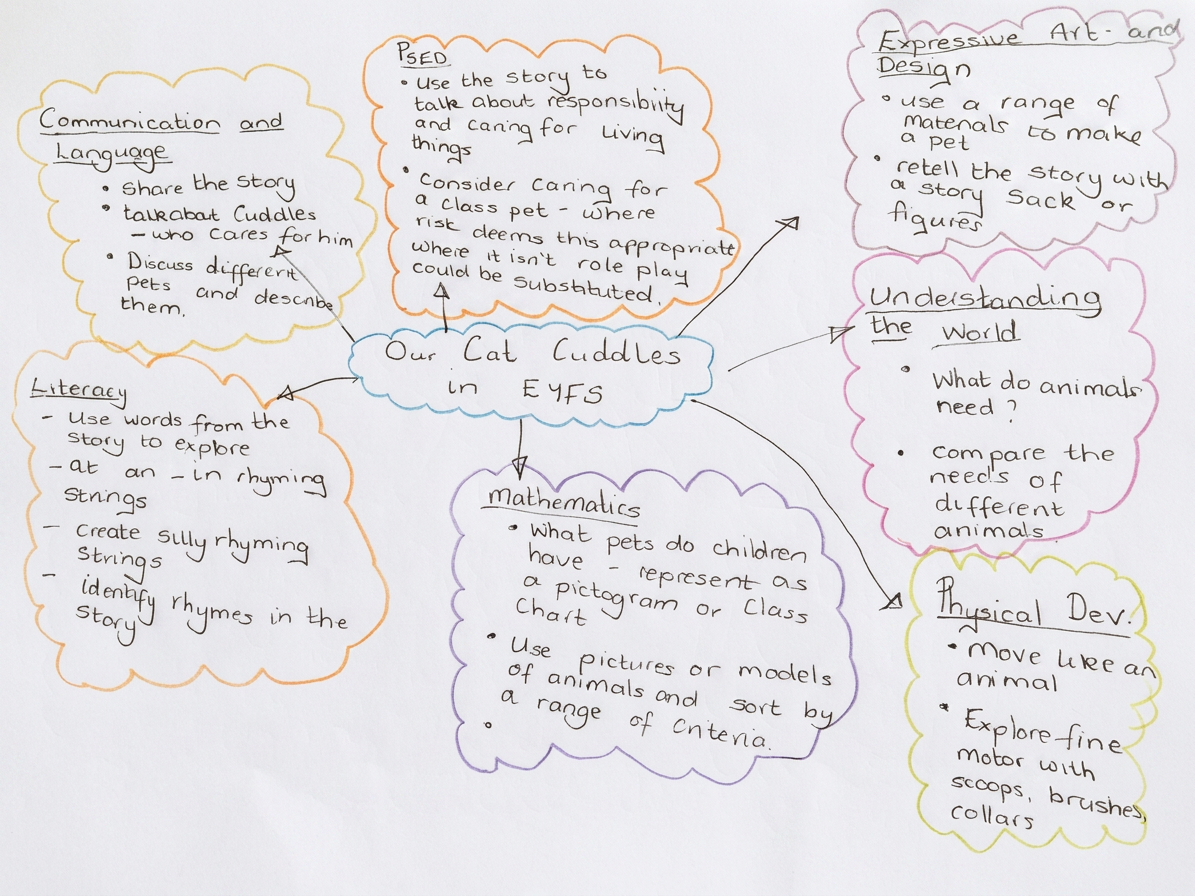
Early Years ideas
In Early Years, Our Cat Cuddles can be explored through shared reading, practical experiences and play. The story offers opportunities to develop language, early literacy, mathematics and an understanding of what it means to care for a living thing.
Communication and Language
Share the story and encourage children to talk about Cuddles and the people who care for him.
Discuss the pets children know or have at home. Invite them to describe what the animals look like, how they behave and what they need.
Useful questions might include:
- Who looks after Cuddles?
- What kind of pet would you like?
- What does a pet need every day?
- How might Cuddles be feeling?
Adults can model and extend vocabulary linked to animals, care and behaviour.
Literacy
Use words from the story to explore rhyme and simple word families.
Children might:
- identify rhyming words in the story;
- create -at rhyming strings such as cat, mat, sat;
- create -in rhyming strings such as pin, tin, win;
- invent silly rhyming strings;
- match pictures or objects that rhyme.
Story sacks, puppets or small-world figures can support retelling. Children could sequence events, recreate favourite parts or invent a new adventure for Cuddles.
Mathematics
Find out which pets children have and represent the results in a simple class chart or pictogram.
Count and compare each group using language such as:
more, fewer, most, least and the same
Provide pictures or models of animals for children to sort in different ways. They might sort by:
- type of animal;
- number of legs;
- wings or no wings;
- fur, feathers or scales;
- pets and non-pets;
- large and small animals.
Encourage children to explain how they have sorted the animals and whether there might be another way.
Understanding the World
Explore what animals need to stay healthy and safe, including food, clean water, shelter, rest, exercise and appropriate care.
Compare the needs of different pets. Discuss why a fish, rabbit, dog and cat cannot all be looked after in exactly the same way.
Children might use books, photographs and small-world animals to find out more about different species and the environments in which they live.
Personal, Social and Emotional Development
Use the story to talk about responsibility and what it means to care for a living thing.
Discuss why pets need looking after every day, even when their owners are busy or no longer feel like playing with them.
Where a setting already has a suitable pet and can fully meet its welfare needs, children might take part in carefully supervised routines such as checking water, preparing food or helping to keep its environment clean.
Where a live animal is not appropriate, a toy pet or pet-care role-play area can offer similar opportunities to practise kindness, turn-taking and responsibility.
Physical Development
Invite children to move like different animals.
They might:
- stretch and prowl like a cat;
- hop like a rabbit;
- scurry like a mouse;
- crawl like a tortoise;
- flap like a bird.
Fine-motor activities could include using scoops to fill bowls, fastening collars, brushing toy animals, transferring pretend food with tongs or pressing animal figures into dough.
Expressive Arts and Design
Provide a range of materials for children to create their own pet using paint, collage, dough or recycled materials.
Explore paw prints, tracks and animal markings. Children could:
- press animal figures into paint, dough or sand;
- compare the shapes of different tracks;
- create repeated paw-print patterns;
- explore spots, stripes, patches and scales;
- use puppets, figures or masks to retell the story.
What about continuous provision?
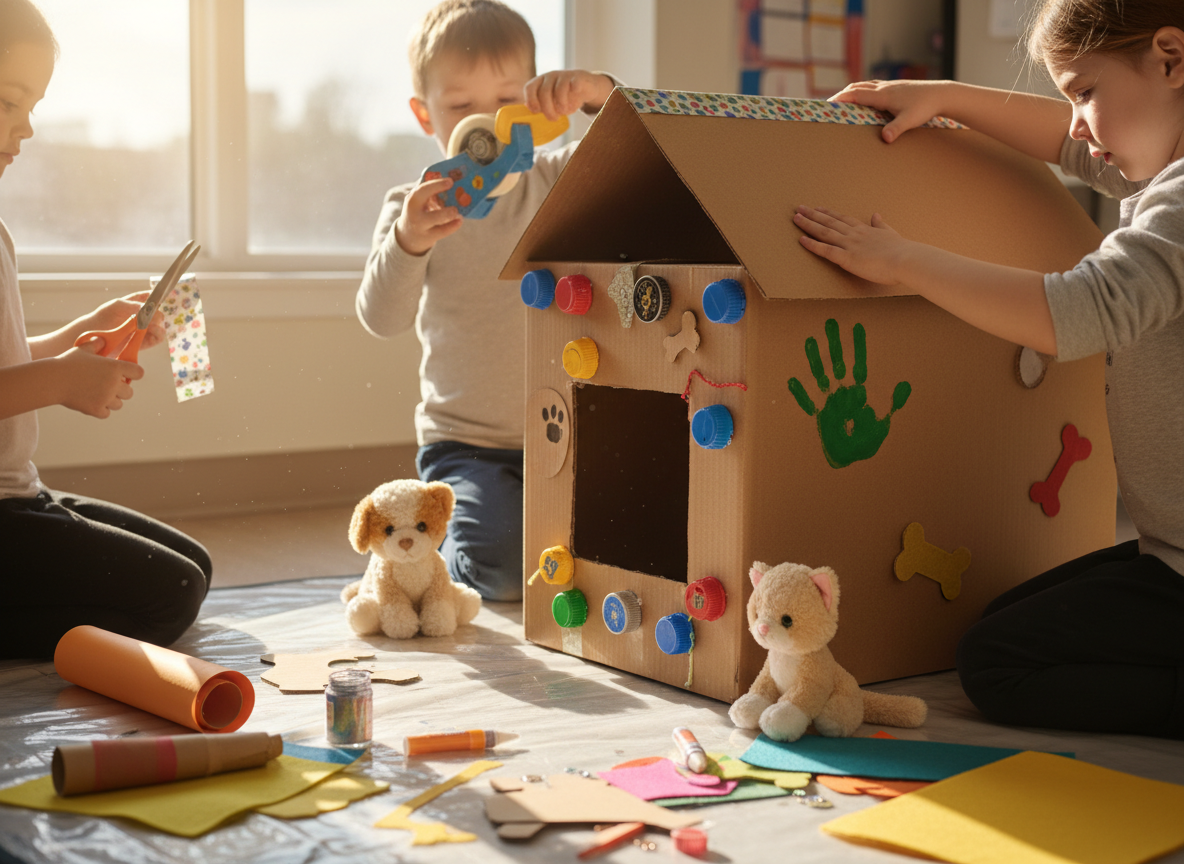
Add small-world animals to dough, paint and sand so children can investigate tracks, create patterns and develop their own stories.
Provide construction materials for building homes, cages, shelters or veterinary spaces. A pet-care role-play area might include toy animals, bowls, blankets, brushes, collars, appointment cards and simple pet-care checklists.
Pictures and models of animals can be added to mathematics provision for sorting, counting and comparing, while books and writing materials can support labels, signs, lists and messages.
These simple additions allow children to return to the story’s themes independently and let the learning continue through play.
Claire’s final thoughts
Our Cat Cuddles naturally opens up opportunities for children to think beyond the story and consider how they might support a local animal shelter or charity.
In my mixed-age Montessori class, with children ranging from three to seven years old, we followed the children’s interests after a visit from Guide Dogs. They chose to organise a cake stall, made their own cakes in the setting and handled real coins as they began to understand prices, payment and giving change.
The project gave their learning a genuine purpose. The children were not simply practising baking, counting or writing in isolation; they were using those skills to help others and contribute to something they cared about.
That is the real strength of a book like Our Cat Cuddles: it can begin with humour and rhyme, then grow into meaningful learning, responsibility and action—continuing the learning far beyond the final page.


Leave a comment